PREVIOUSLY: «    »


Seven Deadly Sins for Scientists

Posted in Science at 1:00 pm by David Bradley -- 44 Comments; add your comment

  • Share/Bookmark

New Seven Deadly Sins

Given recent pronouncements from a certain organisation based in Rome, I thought it was time to list the Seven Deadly Sins for Scientists. Science is often referred to as being without morals and behaving unethically. Well, science itself cannot be either immoral nor unethical, it is only humans who can have those characteristics in how they choose to use science.

But first a quick mention for some fellow sinners. Over on Depth First, the morals of scientific publishing come under the spotlight, while Eye on DNA gives us the Seven Deadly Sins of Genetics. Carol Goble, about whose myGrid work I have written several times, shares her Seven Deadly Sins of Bioinformatics. A rather bizarre Seven Deadly Sins of Obesity appeared in Aussie publication ScienceAlert on March 7 – Consumption obsession, Time pressure, Parenting pressures, Technology, Car reliance, Marketing of unhealthy food, and Confusing advice – only a couple of which look like personal behaviours while the others are simply properties of one’s environment.

The traditional sins are: Lust, Gluttony,
Greed,
Sloth, Wrath,
Envy, Pride
Lust, Gluttony, Greed, Sloth, Wrath, Envy, Pride. (In the original Latin: Superbia, Avaritia, Luxuria, Invidia, Gula, Ira, Acedia, as listed by Pope Gregory the Great in the 6th Century AD. Of course, they’re pretty much standard behavioural characteristics most of us do not want to see in others, but are loathe to recognise in ourselves. Incidentally, it is no coincidence that the words, dissolution, solvation and salvation are connected.

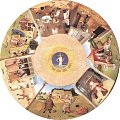
A visual update of this centuries-old moral code was posted on Sciencebase in February 2007 (Seven Deadly Sins) but has been receiving renewed interest because of the Pope’s own update to the capital vices. His new list is as follows: 1. genetic engineering, 2. polluting, 3. drug dealing, 4. abortion, 5. causing social injustice, 6. pedophilia, 7. obscene wealth. They’re not quite as catchy as the original list of cardinal vices, are they? I wonder how quickly the phrase genetic engineering will become redundant as science advances over the next few centuries.

Anyway, after all that waffle, here is a first draft of the six deadly sins of science, I’m leaving a slot empty for Sciencebase readers to fill…what’s the seventh sin of science?

  1. Plagiarism
  2. Lying
  3. Self-plagiarism
  4. Vanity
  5. Vituperation
  6. Procrastination
  7. ?

44 Responses to “Seven Deadly Sins for Scientists”

  1. Someone in my field published a paper, and then a couple of years later published a paper criticising his own work! Two bites at the cherry and giving the impression of being self crtical at the same time.

  2. Michelle, yes, indeed publications are the coinage of the scientific realm. Taking that metaphor to its obvious conclusion duplication and salami publishing can lead only to runaway inflation. The issue of duplication was covered widely earlier in the year, after Errani and Garner published on the topic in Nature (just the once, mind you!)

    db

  3. Papers are the coin of the realm for many, if you wrote a grant to fund some piece of this huge project, you need a publication to provide proof you were a contributing member. Perhaps this multiplication of authors and “salami publishing” are just the scientific incarnations of gluttony. I sometime feel as if I’m choking on the literature, particularly the “methyl, ethyl, propyl…” genre.

    If we’re bridging math and theology – there is a fascinating riff in St. Augustine on the significance of 153, where he uses a series to arrive at that value. I keep meaning to dig in to find out how far back the description of summations of series goes in the literature. And by no means am I suggesting a list of 153 deadly scientific sins!

  4. Randall, I think with those kinds of particles physics papers that are carried out at multiple huge research facilities, such as the Argonne National Laboratory, there really are hundreds of people involved in making any single discovery, but it does beggar belief that they all could have made as significant a contribution to the paper itself.

    db

  5. Its hard to judge its validity as I can’t afford to buy papers… However, I didn’t recognize a single name in the list, so first impression to me is that they are operating under a misconception that a whole bunch of names would add to its credibility and it is a collaborative attempt to write themselves into history.

    i watch it happen frequently in the Science Fiction world, authors doing big PR campaigns, forming alliances and declaring themselves to be the next Jules Verne, Arthur C. Clark, Robert Heinlein, etc and then their books end up to be unimaginative or poorly written.

Leave a Reply