Latest Spectroscopy News
David Bradley currently writes compelling science news for the SpectroscopyNOW.com site across all spectroscopy channels including atomic, plasma, IR, UV/Vis, NMR, MRI, XRD, cheminformatics, Raman and related areas. You can keep up to date with his latest postings on the site via the Sciencebase Science Blog where he posts summaries and links on a regular basis or directly through the SpectroscopyNOW site itself. From March 2001 until the relaunch of the SpectroscopNOW.com channel in October 2005, David Bradley Science Writer provided content for three of the spectroscopy webzines on the site under the banners: Spectral Lines, Resonants and X-factors. Spectral Lines was a wide-ranging webzine covering every aspect of spectroscopy from astronomy to zoology. Resonants covered a wide subject area but focused on scientific research in which nuclear magnetic resonance (NMR) spectroscopy was a factor in the discovery. Likewise, X-factors reported on X-ray crystallography and related subjects. "...[Spectral Lines] provides articles across the many areas of spectroscopy, but with a
popular slant, which means it's good reading for the expert and the
interested lay person alike."
Kate North, New Scientist
"...[Spectral Lines] provides articles across the many areas of spectroscopy, but with a
popular slant, which means it's good reading for the expert and the
interested lay person alike."
Kate North, New Scientist



This is a partial listing of science news items from the SpectroscopyNOW archives
from 2001-2005.
Crystalline imaging
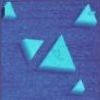 Scientists
in the US have demonstrated a new technique that can follow the
crystallisation process from the very first seeding and provide a sequence
of real time images. The technique could open up new avenues of
investigation into crystal structure, perhaps lead to new ways to make
novel crystalline solid, and even allow researchers to develop ways to
crystallise previously intractable materials for subsequent
crystallographic studies.
Scientists
in the US have demonstrated a new technique that can follow the
crystallisation process from the very first seeding and provide a sequence
of real time images. The technique could open up new avenues of
investigation into crystal structure, perhaps lead to new ways to make
novel crystalline solid, and even allow researchers to develop ways to
crystallise previously intractable materials for subsequent
crystallographic studies.
 The
X-ray structure of a key enzyme involved in replication of the virus responsible
for foot-and-mouth disease has been determined to 1.9 Å resolution. The work
could lead to the development of new drugs to fight the disease without animals
having to be vaccinated or slaughtered in order to control an outbreak.
Jovian X-ray mirror
The
X-ray structure of a key enzyme involved in replication of the virus responsible
for foot-and-mouth disease has been determined to 1.9 Å resolution. The work
could lead to the development of new drugs to fight the disease without animals
having to be vaccinated or slaughtered in order to control an outbreak.
Jovian X-ray mirror
 On
reflection, the planet Jupiter may provide us with the opportunity to observe
activity occurring on the far side of the Sun, according to astronomers using
the European Space Agency's XMM-Newton telescope. They have discovered that
Jupiter's X-ray glow is due to X-rays from the Sun being reflected back off the
planet's atmosphere.
Latest issue of Resonants, the NMR webzine, now online
NMR goes critical for drug separations
On
reflection, the planet Jupiter may provide us with the opportunity to observe
activity occurring on the far side of the Sun, according to astronomers using
the European Space Agency's XMM-Newton telescope. They have discovered that
Jupiter's X-ray glow is due to X-rays from the Sun being reflected back off the
planet's atmosphere.
Latest issue of Resonants, the NMR webzine, now online
NMR goes critical for drug separations
 It
is taken as read that the pharmaceutical industry has to perform countless
separations during R&D before the safest, purest, or most effective
compound can be incorporated into a new product. However, mainstream
industry has yet to take full advantage of one of the cleanest approaches
to separations - using supercritical fluids.
Prion disorder
It
is taken as read that the pharmaceutical industry has to perform countless
separations during R&D before the safest, purest, or most effective
compound can be incorporated into a new product. However, mainstream
industry has yet to take full advantage of one of the cleanest approaches
to separations - using supercritical fluids.
Prion disorder
 Protein
structure has long been the preserve of X-ray crystallography, but a lot
of information is available to the NMR spectroscopist too despite the
complexity and size of these "molecules". NMR comes into its own in
protein studies, however, as can reveal information about the protein in
its natural environment. It can also provide a wealth of information that
is simply unavailable to the crystallographer should the protein of
interest fail to crystallise.
MAS glass
Protein
structure has long been the preserve of X-ray crystallography, but a lot
of information is available to the NMR spectroscopist too despite the
complexity and size of these "molecules". NMR comes into its own in
protein studies, however, as can reveal information about the protein in
its natural environment. It can also provide a wealth of information that
is simply unavailable to the crystallographer should the protein of
interest fail to crystallise.
MAS glass
 MAS-NMR
spectroscopy is the perfect tool for characterising the structure of
amorphous solid materials, according to Artemis Stamboulis of the
University of Birmingham. She and her team have spent the last few years
using MAS-NMR to investigate a technologically important class of
amorphous materials, the fluorine-containing solids. These materials
include ionomer glasses, such as oxyfluoride glasses are used as mould
flux glasses for steel casting and optical glasses for laser applications.
Related materials are also being studied for dental applications as
radio-opaque cements as well as the starting point for machinable
glass-ceramics used to make computer hard disks.
Spectral Lines Issue 45 online now
A crush on MEMS
A team at Sandia Laboratory in Alberquerque, New Mexico, has developed a
unique system for testing the minute within microelectromechanical systems
(MEMS) and lab-on-a-chip devices down to a gas pressure of just 0.0001
torr. They are now working towards lowering that value by two orders of
magnitude which will bring them close to the vacuum threshold.
Weighing up the new kilogram
A new definition of the kilogram could improve the precision of a wide
range of instrumentation by providing researchers with a mass unit based
on a fundamental property of a defined quantity of matter rather than the
weight of an piece of platinum-iridium alloy housed in a French basement.
Neanderthal spectrometry
MALDI-TOF/TOF mass spectrometry was key to sequencing the oldest fossil
hominid protein from two Neanderthals from Iraq dated at 75,000 years. The
Fossil analysis, based on direct sequencing and peptide mass mapping,
reveals that the bone protein osteocalcin found in Neanderthal bones is
identical to that in modern humans.
Microscopic cleanliness
Microorganisms, such as bacteria, which can infiltrate even the cleanest
of industrial food or pharmaceutical clean-rooms causing potential health
hazards, production downtimes, and contamination of important samples in
the case of research labs. Now, a German research team has developed
single-particle micro-Raman spectroscopy in combination with a
classification method to allow them to quickly and reliably identify
single bacteria. The researchers say the non-destructive technique works
on a short timescale and is reliable.
X-factors Issue 17 of the x-ray crystallography webzine is now online
MAS-NMR
spectroscopy is the perfect tool for characterising the structure of
amorphous solid materials, according to Artemis Stamboulis of the
University of Birmingham. She and her team have spent the last few years
using MAS-NMR to investigate a technologically important class of
amorphous materials, the fluorine-containing solids. These materials
include ionomer glasses, such as oxyfluoride glasses are used as mould
flux glasses for steel casting and optical glasses for laser applications.
Related materials are also being studied for dental applications as
radio-opaque cements as well as the starting point for machinable
glass-ceramics used to make computer hard disks.
Spectral Lines Issue 45 online now
A crush on MEMS
A team at Sandia Laboratory in Alberquerque, New Mexico, has developed a
unique system for testing the minute within microelectromechanical systems
(MEMS) and lab-on-a-chip devices down to a gas pressure of just 0.0001
torr. They are now working towards lowering that value by two orders of
magnitude which will bring them close to the vacuum threshold.
Weighing up the new kilogram
A new definition of the kilogram could improve the precision of a wide
range of instrumentation by providing researchers with a mass unit based
on a fundamental property of a defined quantity of matter rather than the
weight of an piece of platinum-iridium alloy housed in a French basement.
Neanderthal spectrometry
MALDI-TOF/TOF mass spectrometry was key to sequencing the oldest fossil
hominid protein from two Neanderthals from Iraq dated at 75,000 years. The
Fossil analysis, based on direct sequencing and peptide mass mapping,
reveals that the bone protein osteocalcin found in Neanderthal bones is
identical to that in modern humans.
Microscopic cleanliness
Microorganisms, such as bacteria, which can infiltrate even the cleanest
of industrial food or pharmaceutical clean-rooms causing potential health
hazards, production downtimes, and contamination of important samples in
the case of research labs. Now, a German research team has developed
single-particle micro-Raman spectroscopy in combination with a
classification method to allow them to quickly and reliably identify
single bacteria. The researchers say the non-destructive technique works
on a short timescale and is reliable.
X-factors Issue 17 of the x-ray crystallography webzine is now online
Crystalline cancer drug
After ten years of work on the novel anticancer drug epothilone, researchers finally obtained a crystal structure of it its bioactive conformation bound to the cellular component tubulin in 2004. Now, the compound's discoverer discusses the implications of the structure and the future of epothilone.
Carbon's liquid assets
A collaboration between US and Swiss researchers has provided new insights into the nature and bonding of carbon in the liquid phase. The team exploited a newly developed technique, picosecond time-resolved X-ray absorption spectroscopy, which allows them to overcome problems of liquid carbon's high volatility and its transient nature.
Chagas crystallised
The crystal structure of the tryparedoxin peroxidase from the human parasite Trypanosoma cruzi which causes the lethal South American trypanosomiasis known as chagas is reported for the first time by researchers in Uruguay and France. The structure will improve our understanding of metabolic processes in tripanosomes and could provide a new target for drugs against the disease.
Resonants - Issue 18 of the NMR news webzine is out now Cockroach cocktailUS chemists have used NMR to identify the active component of the sex attractant of the female cockroach. Having now also synthesised the compound for the first time, they suggest it could become a new tool for fighting this common urban pest, which would beat the shoe heel and reduce the need for widespread insecticidal spraying.
Molecular apple peelA helical molecule that wraps itself around a smaller compound in a fashion resembling an apple peel encapsulating an egg can isolate its captive from solvent molecules. NMR studies by the inventors of the molecular apple peel reveal that the system could represent an entirely new approach to making supramolecular host-guest structures for catalysis, sensors, and reactions.
Superconducting wiresUS researchers have discovered that ultrathin superconducting wires can withstand stronger magnetic fields than larger wires composed of the same material and could be useful in NMR and MRI technologies.
CASSINI-HUYGENS SPECIAL ISSUE - Spectral Lines Issue 44 The mission An astounding vision of raging winds, a methane-rich atmosphere and a surface of dirty ice frozen like rock is emerging from data transmitted the billion and a half kilometres to Earth. The instruments aboard the Huygens probe, which plunged into the atmosphere of Titan the largest of Saturn's 33 moons on January 14 are painting a picture of an enigmatic atmosphere and complex surface chemistry that will keep the scientist involved in the project busy for years. A Titanic methane source The Aerosol Collector and Pyrolyser aboard Huygens collected atmospheric aerosols carried out a preparation involving evaporation, pyrolysis and gas product transfer and then an analysis with gas chromatography-mass spectrometry. The ACP collected two samples one from the top of the descent down to the tropopause and the second sample in the cloud layer. Descend and detect Huygen's Descent Imager/Spectral Radiometer took images of Titan's surface as well as making spectroscopic measurements over a wide spectral range. DISR surface images revealed the region of Titan on which the probe landed to have a pebbly and dry riverbed while the colour spectral measurements were shown to be consistent with a composition of dirty water ice rather than silicate rocks. At Titan's chilling temperatures though this material has rock-like properties rather than behaving like water ice on Earth. Crème Brulée and surface science It was the Huygens Atmosphere Structure Instrument that allowed Huygens to tell researchers that the surface at the point of impact is rather like "crème brulée" having a hard skin but a squelchy interior. Huygens' Surface Science Package is a suite of sensors to determine the physical properties of the surface at the impact site and to provide unique information about its composition. Doppler results - no small breeze The Doppler Wind Experiment used radio signals to deduce atmospheric properties. The probe drift caused by winds in Titan's atmosphere produced a measurable Doppler shift in the carrier signal to be relayed to the Cassini Orbiter by Huygens. The swinging motion of the probe beneath its parachute and other radio-signal-perturbing effects, such as atmospheric attenuation, would also be detectable from the signal. RESONANTS Crystal gas tank A
van der Waals crystal studied by X-ray diffraction could act as a gas storage
material for greenhouse gases methane and carbon dioxide, according to
researchers in Italy.
X-ray lasers, take two
The
Stanford Linear Accelerator Center will build and operate the world's first
X-ray free-electron laser by 2009 thanks in part to a cash injection from
Congress.
And nine countries have signed up to build the European X-ray laser XFEL (X-ray
free-electron laser).
Them bones, them bones, them artificial bones
Hydroxyapatite prepared via three different routes shows very
different crystallinity in an X-ray diffraction study carried out by a Singapore
team. The results suggest that materials scientists wishing to exploit this
"natural" material, in synthetic bone, tissue engineering, and other
applications will need to take care with their ingredients and preparative
techniques to ensure they have made the material they aimed for.
An organic approach to natural products
NMR
was an essential tool in a study of hydrocarbon oxidation reactions that could
provide a simpler and cheaper route to pharmaceutical intermediates than the
current carbon-carbon bonding forming approach.
A lot of rotten heavy metal
New clues about the effects of fungi on the main structural
components of living wood is possible using NMR and other analytical tools and
could lead to a novel approach to bioremediation of industrial pollutants.
Magnets in a spin
A current of spin polarized electrons can flip certain
magnetic materials from one state to the other without the need for magnetic
fields. This ring demonstration of spintronics could lead to major advances in
the development of fast and high-density magnetic memory for computing.
Two-pronged attack on anthrax
The aminoglycoside antibiotic Neomycin B not only kills
anthrax bacteria but also locks on its "lethal factor" toxin so blocking its
activity. This useful bifunctionality could, according researchers in the US and
Israel team provide a more effective defence against the use of anthrax by
terrorists.
Spectral shift reveals puzzling quasar
In the heart of the nearby spiral galaxy NGC 7319, which lies in the
constellation of Pegasus, there lurks a mysterious interloper. An international
team of astronomers has identified this interloper as a quasar whose light
spectrum suggests it to be billions of light years away, raising a paradox of
cosmic scale given that NGC 7319 is itself only 300 million light years away.
Food testing on the surface
Toxins associated with bacterial contamination of
foods such as ham, milk and eggs can be detected much more readily thanks to
research into surface plasmon resonance at the US Agricultural Research Service.
Strictly microscopy
An atomic force microscope that can take images of periodic
processes with a time resolution of just microseconds has been developed by MIT
researchers. The system can carry out fast scans that are faster by an order of
magnitude than conventional a "rapid-scan" AFM.
A
van der Waals crystal studied by X-ray diffraction could act as a gas storage
material for greenhouse gases methane and carbon dioxide, according to
researchers in Italy.
X-ray lasers, take two
The
Stanford Linear Accelerator Center will build and operate the world's first
X-ray free-electron laser by 2009 thanks in part to a cash injection from
Congress.
And nine countries have signed up to build the European X-ray laser XFEL (X-ray
free-electron laser).
Them bones, them bones, them artificial bones
Hydroxyapatite prepared via three different routes shows very
different crystallinity in an X-ray diffraction study carried out by a Singapore
team. The results suggest that materials scientists wishing to exploit this
"natural" material, in synthetic bone, tissue engineering, and other
applications will need to take care with their ingredients and preparative
techniques to ensure they have made the material they aimed for.
An organic approach to natural products
NMR
was an essential tool in a study of hydrocarbon oxidation reactions that could
provide a simpler and cheaper route to pharmaceutical intermediates than the
current carbon-carbon bonding forming approach.
A lot of rotten heavy metal
New clues about the effects of fungi on the main structural
components of living wood is possible using NMR and other analytical tools and
could lead to a novel approach to bioremediation of industrial pollutants.
Magnets in a spin
A current of spin polarized electrons can flip certain
magnetic materials from one state to the other without the need for magnetic
fields. This ring demonstration of spintronics could lead to major advances in
the development of fast and high-density magnetic memory for computing.
Two-pronged attack on anthrax
The aminoglycoside antibiotic Neomycin B not only kills
anthrax bacteria but also locks on its "lethal factor" toxin so blocking its
activity. This useful bifunctionality could, according researchers in the US and
Israel team provide a more effective defence against the use of anthrax by
terrorists.
Spectral shift reveals puzzling quasar
In the heart of the nearby spiral galaxy NGC 7319, which lies in the
constellation of Pegasus, there lurks a mysterious interloper. An international
team of astronomers has identified this interloper as a quasar whose light
spectrum suggests it to be billions of light years away, raising a paradox of
cosmic scale given that NGC 7319 is itself only 300 million light years away.
Food testing on the surface
Toxins associated with bacterial contamination of
foods such as ham, milk and eggs can be detected much more readily thanks to
research into surface plasmon resonance at the US Agricultural Research Service.
Strictly microscopy
An atomic force microscope that can take images of periodic
processes with a time resolution of just microseconds has been developed by MIT
researchers. The system can carry out fast scans that are faster by an order of
magnitude than conventional a "rapid-scan" AFM.
Sounding out dolphin navigation with NMR
Italian researchers have used NMR and morphological studies to determine the lipid composition of the "melon", the echolocation organ of the striped dolphin. Their findings might ultimately lead to a new approach to tuna fishing in the Mediterranean that prevents the species from being needlessly trapped in fishing nets.
NMR relates metabolic syndrome to ethnicity A proton NMR study has found that almost one third of American adults in a large urban population sample have fatty liver disease, hepatic steatosis, and has shed some light on the link between ethnicity and the disease. Spinning a yarnChinese researchers have developed a new type of artificial fibre that could side-step the pollutant issues associated with the production of viscose. The team used wide angle X-ray diffraction and CP/MAS carbon NMR to show that their novel cellulose fibres have a structure typical for a family II cellulose and possess a relatively high degree of crystallinity.
Toxic imprint A polymer imprinted with the three-dimensional shape of bisphenol A-d16 will be useful in detecting bisphenol A in blood serum and allow more accurate monitoring of people working in the polymer resin industry as well as those suspected of environmental exposure. Reversible aggregationUV/Vis spectroscopy reveals how gold nanoparticles can be reversibly bound to DNA, opening up a new inroad to the research field of bionanotechnology.
Martian blueberries NASA's Opportunity rover is currently wending its way across the Martian landscape sampling and testing in the hope of finding nuggets of information that will improve our understanding of the Red Planet and even provide evidence of water and so the possibility of life there. Opportunity's Mössbauer spectrometer specifically identifies iron-containing rocks and at the beginning of December identified four mineralogic components in Meridiani Planum at Eagle crater, including haematite-rich "blueberries" and jarosite, an iron hydroxide sulfate mineral. Electron channels An Austrian team has used photoelectron spectroscopy and other techniques to observe for the first time the details of electrons as they move along predetermined channels in a metal. The research provides important new insights into the interactions of electrons and could have implications for the development of new superconducting materials.In the latest issue of X-factors: Japanese researchers have used X-ray diffraction to show how silicon nitride ceramics crystallise in a strong magnetic field. Their findings reveal that the magnetic field can reorient the crystal lattice and so could provide an effective way of fine-tuning the physical properties of these important technological materials. Red wine connoisseurs will be pleased to learn that the crystal structure and ab initio calculations of the phenolic antioxidant resveratrol found in their favourite tipple both reveal a structure that might explain the compound's potent antioxidant properties and its purported protective effects on the heart.
Finding a way to arrange nanowires on a surface will be crucial to their development as useful materials for future molecular electronics and other nanoscale devices. Now, an Israeli team has demonstrated that single-walled carbon nanotube patterns can be produced using atomic steps on such a surface as a template. They have also devised a new technique, "asymmetric double-exposure back-reflection XRD", to help them determine the surface characteristics. Highlighted this month in Spectral Lines: Smart dust goes magnetic - Dust-sized chips of silicon can surround and control the motion of molecules, cells, and bacteria within a droplet of liquid, according to chemists at the University of California, San Diego. Also in Issue 41, Titan's electronic secrets, UK astronomers take a spectral view of Saturn's major moon, weight gain revelations, and finally, the infra-red miner's lamp.