Mrs Sciencebase and I opted to follow the footpath from the RSPB Ouse Fen (Earith) car park to what we refer to as the “Clouded Yellow Field”, which is the patch where we saw that butterfly in numbers in 2022 and that leads on to Brownshill Staunch where I spotted the previously mentioned Sandwich Tern.
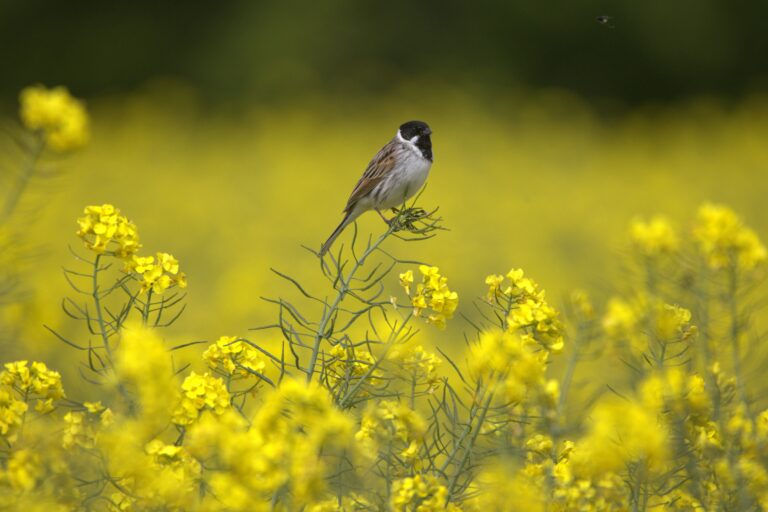
It’s a nice stretch to stretch one’s legs. Lots of Marsh Harrier activity over the reed beds, Chinese Water Deer and Roe Deer to see. Calls from Sedge Warbler, White Throat, Chiff Chaff (all warblers). We could hear some Bearded Reedling calling and Bittern booming and saw two different pairs of that latter species flying over the reedbeds. Also plenty of Reed Bunting around resplendant in their breeding plumage.
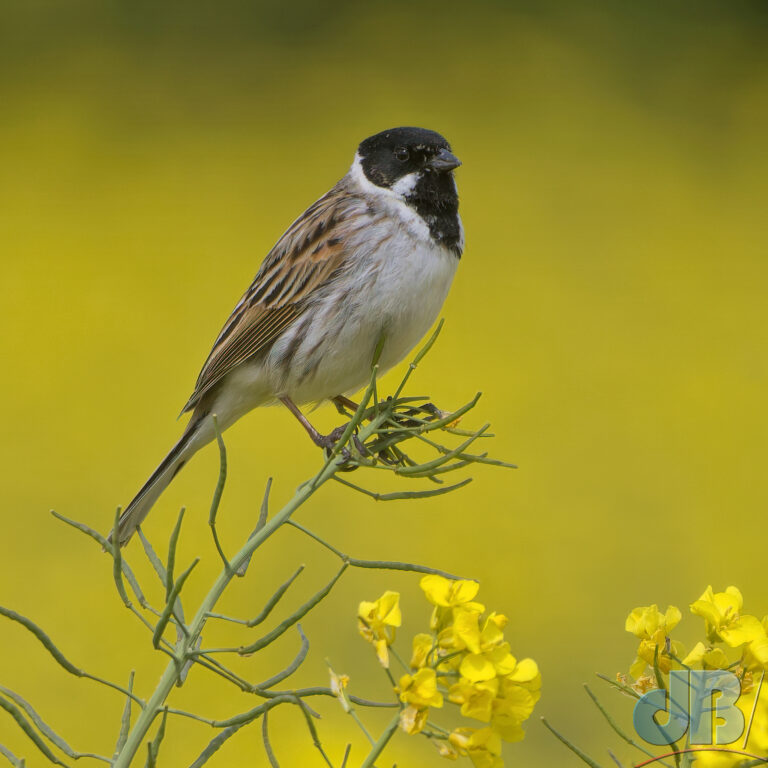
If this bird were named in the same way as one of its close relatives, Emberiza citrinella, it would be called a Reedhammer (as in Yellowhammer, where “hammer/ammer” is old German for “bunting”. Of course, in modern German the Yellowhammer is the “Goldammer”, while the Reed Bunt is “Rohrammer”, Rohr meaning pipe and presumably alluding to the pipe-like reeds.
In my photo you can see an example of why it’s important to get a catchlight in the eye of a bird or other animal. Without that tiny glint of reflected light, the eye would have little character and with a bird like this would be lost against the black of its facial plumage.
I used DxO PureRaw4 to do automatic lens and camera corrections and to denoise the RAW file from the Canon R7 (lens was Sigma 150-600mm at full extent). I then ran the DNG output from PureRaw4 through Topaz Sharpen AI v 4.1.0 to tighten up those feathers a little and then PaintShopPro Ultimate 2022 to tweak levels ever so slightly and to crop and add my logo. Camera settings: f/6.3, t 1/4000s, ISO 800.
The image below is an unedited JPG grab from the original camera RAW file